
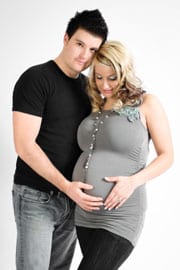
You can use prenatal paternity tests to establish paternity before a child is born. Since the baby’s DNA is set at conception, a paternity test during pregnancy is just as accurate as one done later.
Like a standard paternity test, these tests compare the baby’s DNA with that of the alleged father. The lab will usually require the mother to be tested in addition to the father.
That’s because a prenatal sample contains cells from both the mother and the child. So the laboratory needs to distinguish her DNA from the baby’s.
Prenatal Sample Collection
Of course, the mother also has to participate in the procedure for sampling of the baby’s DNA. In most cases an OB/GYN will perform one of the following two procedures depending on the stage of pregnancy:
1. Chorionic Villi Sampling (CVS)
During the 10th to 13th week of pregnancy, your doctor can take a small sample of “chorionic villi” from the wall of the uterus. These finger-like pieces of tissue and the fetus come from the same fertilized egg, and have the same genetic makeup. The procedure uses a thin needle or tube inserted either through the vagina or the abdominal wall.
2. Amniocentesis
During the 14th to 24th week of pregnancy, the doctor can draw a sample of amniotic fluid. This fluid, found in the sac surrounding the developing fetus, contains fetal cells that can be used for DNA analysis. The doctor will insert a thin needle through the abdomen into the uterus.
Risks to Consider
Both of these prenatal paternity tests use an ultrasound to guide the needle. Yet both procedures are invasive and risks include infection, miscarriage, and side effects for the mother. Because of these risks, many physicians will not do these tests for paternity reasons alone. They’ll only check paternity if the mother needs the tests for other health issues. All mothers should consult their OB/GYN for more information about the risks involved.
Sample Collection from the Parents
DNA samples from the mother and the alleged father can be collected through a painless and non-invasive “buccal” swab. This cotton-like swab is rubbed against the inside of your mouth to gather loose cheek cells.
Non-Invasive Prenatal Paternity Test
The latest option is a “non-invasive” test that avoids the small risks inherent in the other two procedures. The lab collects DNA from both mother and baby through a sample of the mother’s blood.
This test can be performed any time starting in the 9th week of pregnancy
This approach is possible because a variety of cell types from the fetus can cross the placenta and circulate within the mother’s blood. The lab compares the fetal DNA with the mother’s DNA to determine which markers must have come from the biological father. Then they check the alleged father’s DNA to see if he has the correct paternal markers.
Consult your doctor about this type of testing.