
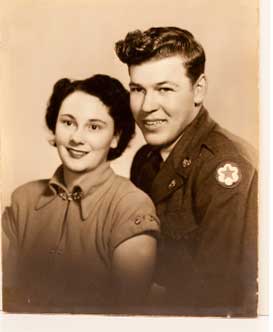
Today, many adoptees are tracing birth parents through DNA testing. I did it myself, reuniting with my birth father’s family more than twenty years after he had died. To get to the truth I used several DNA tests.
Tracing Birth Parents: Autosomal DNA Tests for Everyone
Autosomal DNA is the DNA that everyone inherits from both parents. There are five such tests that analyze this DNA and compare yours to everyone else in the same database. Click the links to learn more about each test.
AncestryDNA Family Finder 23andMe MyHeritage Living DNA
Each test has different strengths. But each can find blood relatives who share a common ancestor with you from the last five generations and sometimes even father back.
As of 2021, more than 30 million people have done at least one of these autosomal DNA tests. If you’re an adoptee, your chances of tracing birth parents through DNA testing are good and getting better.
Most people only test with one of these companies and there is no way to know in advance which test will uncover your closest relative or the person with the most information. You need to “fish in all the ponds.”
Fortunately, with new lower prices and some free transfer options, you can get into all five databases for less than $200 total if you follow my recommendations.
As a side benefit, each of these autosomal DNA tests includes an estimated breakdown of your overall ethnic ancestry.
My Recommendations for Autosomal DNA Testing
Several autosomal DNA databases accept data uploads for free. With that in mind, follow these steps and use my links to get the most coverage for the least cost:
1. Get all the information you can from adoptive family members and your non-identifying information. Any clue may prove helpful when tracing birth parents.
2. Begin by ordering the AncestryDNA test, which has the largest database and the most family trees.
3. After you get your results, download your raw Ancestry DNA data and upload it for free into Family Finder at Family Tree DNA.
4. Upload your Ancestry DNA data to the MyHeritage database on their Free Upload page.
5. Upload your AncestryDNA data to the Living DNA database here.
NOTE: Each free account allows you to see and communicate with your matches. Some features are reserved for paying customers and may be accessed for a small fee that is entirely optional.
6. Upload your raw data to GEDmatch.com. This site has many useful advanced tools. The basic tools are free. Others are available by subscription.
7. Order the 23andMe test, which has the second largest database and does NOT accept uploads from other tests. The Ancestry option includes the important DNA Relatives feature. The more expensive Health+Ancestry option also provides some genetic health information. If you have little or no family medical history, you may want the higher cost option.
Keep checking your DNA accounts periodically. Thousands of new people are testing every week and each testing company will continue to look for new matches. A mystery-solving match may show up at any time.
Speed Up Your Search and Guarantee Success
Rather than working on this yourself over many months or years, you can contact Origins International at (801) 500-0900. Ask for a free case review.
Depending on your situation, they will quote you a firm price for finding your birth parent or parents. If they cannot accomplish this within 90 days or less, you pay nothing.
For six reasons why I recommend Origins for tracing birth parents, see my Birth Parent Search page.
Another Tool for Men: Y-DNA Testing
This is the test that I used to learn my birth father’s surname. If you’re a male adoptee, I recommend you take a Y-DNA test in addition to the autosomal tests.
Even if you’re primarily searching for your birth mother, narrowing down the possibilities for your birth father can simplify your search.
This test works because the Y chromosome passes down, relatively unchanged, from father to son, generation after generation.
By checking your Y-DNA against a huge database of other men, you can find cousins who share a common ancestor in your father’s paternal line.
Since men usually pass down their surname to their sons, you may find that a majority of your matches cluster around one particular surname.
That name, most likely, will be the last name of your biological father.
Once you find that name, tracing birth parents becomes easier. You can narrow your search to men of that surname who lived in the time and place of your conception.
My Recommendation for Y-DNA Testing
I recommend that you order your Y-DNA test from the company with the largest Y-DNA database by far: Family Tree DNA.
About half the adopted men who take this test are discovering their paternal surname in their initial results. For others the chances of uncovering that hidden surname will increase over time.
NOTE: The 37-marker test is often sufficient to identify your likely surname. You only need more markers if you get too many close matches and need to narrow down your list. You can always upgrade from 37 to 111 markers later. If money is less of an issue and you want to save time, you can test 111 markers in the first place.
Contacting Your Matches
Whether you use autosomal or Y-DNA testing, you should contact your matches to learn what they know.
What you’re looking for is branches of their families that extend into the same geographic area where you were born.
When tracing birth parents with DNA testing, remember that your Y-DNA matches will definitely connect to your father’s direct paternal line. But your matches from the autosomal tests could connect to you through any branch of your family tree.
Many of the matches who respond to your inquiry will be genealogists with extensive family trees.
While most people are willing to help adoptees with tracing birth parents, you may run into the occasional person who is not sympathetic to your cause.
Therefore, you may want to omit any mention of adoption until you collect the basic information about the other person’s family.
As you get closer to a birth parent, be as discrete as possible. You don’t know if that person has told his or her family about the child given up so long ago. Be careful to respect their privacy.
An Ongoing Process
If you don’t uncover useful information right away, don’t be discouraged. Thousands of new people order these DNA tests every week.
It might take awhile to find the close match with key information that’s the breakthrough you need. Your presence in the databases is the necessary first step.
Relationship Testing
Eventually, some combination of DNA testing and conventional research should lead you to your birth parents or their families.
Then you can confirm your relationship through the autosomal tests.
Simply have a suspected close relative take one of the same autosomal DNA tests that you did.
The subject of the test can be a potential parent, sibling, aunt, uncle, grandparent, or first or second cousin. The results will confirm if and how you are related.
The tests can even distinguish a half sibling from a full sibling.
Just take the number of centiMorgans you share and enter it into the box on this page to see the possible relationships for that amount of shared DNA.
Mitochondrial DNA?
Both men and women can also take a mitochondrial (mtDNA) test from Family Tree DNA that follows the maternal line. But learning anything about recent relatives from an mtDNA match can be elusive.
That’s partly because the maternal line usually changes surnames every generation. It’s also because mtDNA mutates very slowly. The common ancestors you share with your matches may have lived thousands of years ago.
All this means that mitochondrial testing is the least informative DNA test for tracing birth parents. Unless you have additional funds and are curious about the origins of your maternal line, I suggest you save your money.
Focus on the Y-DNA and autosomal tests described above.